
This blog was contributed by Vesna Nikolic. Learn more about Vesna’s path in the lineage below.
Many people who feel drawn to contemplative Christianity eventually encounter a quiet but persistent question: How do we actually live the teachings of Jesus in the complexity of our modern lives?
The English writer G. K. Chesterton once observed: “The Christian ideal has not been tried and found wanting; it has been found difficult and left untried.” [What is Wrong with the World? 1910, G.K. Chesterton]
Many seekers sense the truth in that remark. The teachings of Jesus are luminous and compelling, yet they are also extraordinarily demanding. Watchfulness, humility, forgiveness, love of enemies, dying to oneself are not simply inspiring ideas. They point toward a real transformation of the human being.
For many students of Wisdom Christianity, the work of G. I. Gurdjieff becomes a surprising and powerful companion on that journey.
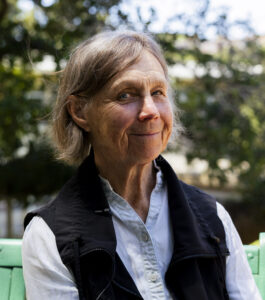
Over more than four decades, Cynthia Bourgeault has explored the meeting point between these two streams. In her teaching, Gurdjieff does not appear as an alternative to Christianity, but as someone who helps make explicit a practical map of inner transformation that lies implicit within the Gospel tradition itself.
While Gurdjieff traveled widely in the East and was deeply familiar with, and influenced by, many ancient traditions, most notably Sufism, it is important to remember that his own roots were unmistakably Christian.
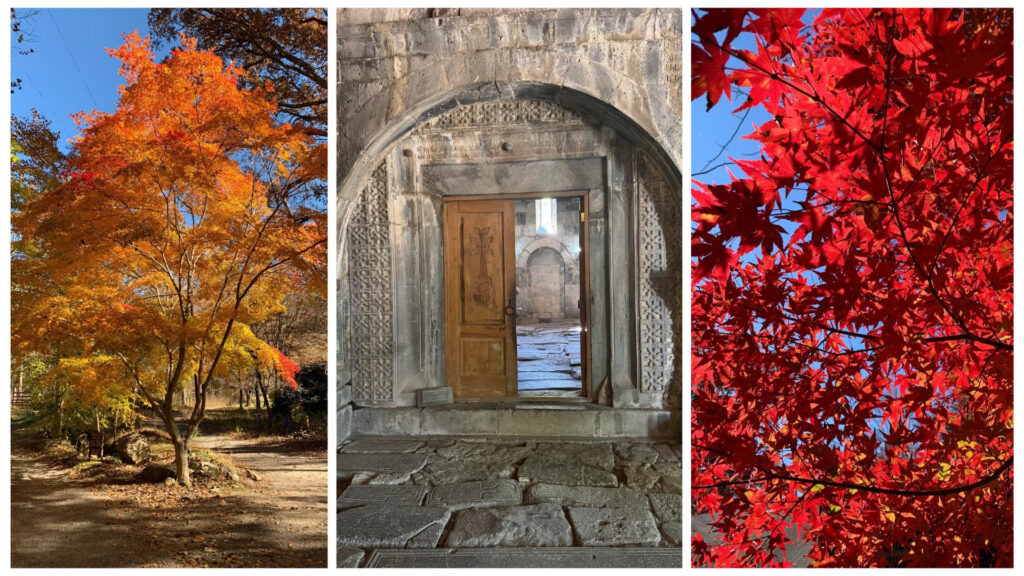
He was born in Alexandropol (present-day Gyumri), then part of the Russian Empire, to an Armenian mother and a Greek father. He was tutored by Dean Borsch, a Greek Orthodox priest who was “the highest spiritual authority for the whole of that region conquered not long before by Russia.” [Meetings with Remarkable Men [MWRM], G.I. Gurdjieff, page 50].
Another of his teachers, Bogachevsky (a.k.a. Father Evlissi), later became “an assistant to the abbot of the chief monastery of the Essene Brotherhood, situated not far from the shores of the Dead Sea.” [MWRM, page 58] and who, by the words of Gurdjieff himself “became one of the first persons on earth who has been able to live as our Divine Teacher Jesus Christ wished for us all.” [MWRM p.77]
Singing in the choir of the Greek Orthodox Church from an early age, the liturgical prayers and gestures of native Eastern Christianity became imprinted into his being.
Gurdjieff emerged from the atmosphere of Eastern Christianity, a stream of the tradition that in many ways remained closer to its earliest sources. Unlike Western Christianity, which developed for centuries within the political and theological structures of the Roman Empire, Eastern Christianity preserved a strong emphasis on inner transformation, direct spiritual experience, and participation in the divine life.
Seen in this light, Gurdjieff’s language about attention, self-remembering, conscious labor, and intentional suffering begins to show a deep consonance with ancient Christian practices of watchfulness, kenosis, and the gradual awakening of the heart.
Through Cynthia Bourgeault’s teaching, these two streams—Wisdom Christianity and the Gurdjieff Work—enter into a living dialogue. The course “Gurdjieff for Christians” offers a rare opportunity to explore this dialogue with Cynthia as guide.
And yet there can be a paradox in encountering the teachings of Gurdjieff in this way. Because the ideas themselves are rich and precise, they can easily be taken in primarily through the intellectual center. Concepts such as the Law of Three, the Law of Seven, or self-remembering can quickly become fascinating material for thought and discussion.
However, both Gurdjieff and the Christian contemplative tradition remind us that ideas alone do not transform us.The real work begins when these ideas are brought into lived experience, into the simple and often humbling effort to observe ourselves, to return to attention, and to remain present in the midst of ordinary life.
For this reason, the course will be accompanied by regular gatherings in small circles, where participants can share observations arising from their engagement with the material and with the suggested inner tasks. These meetings are not intended for analysis or debate, but for something quieter and more essential: supporting one another in the practice of embodied attention.
Often the most valuable insights arise not from mastering a concept but from noticing how easily we forget, how scattered our attention becomes, and how repeatedly we are invited to begin again.
A course such as this can only offer a broad introduction to a very deep stream of work. For some participants it may serve as a meaningful exploration that enriches their understanding of the Christian Wisdom tradition. For others it may awaken a quieter but more persistent sense that something essential has been glimpsed.
For those who feel that call, this path is not something that can be completed or mastered. It is not undertaken in order to achieve something, to improve oneself, or even simply to feel better. Rather, it invites us into a lifelong engagement. To learn to ask deeper questions, to listen more attentively, and gradually to become more transparent to the divine life moving through us.
In the language Cynthia Bourgeault often uses, the aim is not self-perfection, but becoming a vessel through which God’s love and intelligence can flow more freely into the world.
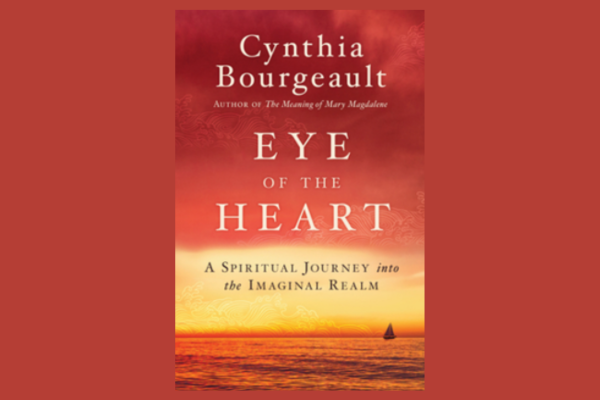
Learn more about the spring “Gurdjieff for Christians” guided cohort here. Registration is now open. Additionally, for those interested in joining our The Eye of the Heart Wisdom Practice Book Circle in the fall of 2026, engaging this cohort will provide a foundational teaching and exposure to Gurdjieff’s language and themes, helpful in working with and integrating The Eye of the Heart this fall.
This blog was contributed by Vesna Nikolic, one of the cohort facilitators for the “Gurdjieff for Christians” offering. For many years, she has been walking a path shaped by both the Gurdjieff Work and contemplative Christianity, and is an active contributor to the Wisdom Waypoints community.
Her interest in bringing these two traditions into conversation arises from her own lived experience. Over time, she began to notice a meaningful relationship between them that revealed itself not only in ideas, but in practice and inner work. This became especially clear to her through the consonance she perceived between the writings of the Jesuit mystic and scientist Pierre Teilhard de Chardin and the teachings of G. I. Gurdjieff. Together, they seemed to form a greater whole.